Un fermier prend affectueusement soin de sa vache brune, sans savoir que lui et la vache se sont déjà rencontrés dans des vies antérieures, une fois au XVIIIe siècle et une autre fois au XXe.
Avertissement de contenu : harcèlement sexuel, violence, incendie
Une terre du nord, la fin de l'hiver. Une avant-aube froide et sombre au bord d’une montagne ; à travers la vallée rugit une puissante cascade. Dans cette vallée, il y a deux fermes, une pauvre - appartenant à Runa, une femme célibataire - et une riche, appartenant à Olaf, qui souhaite que Runa soit son épouse.
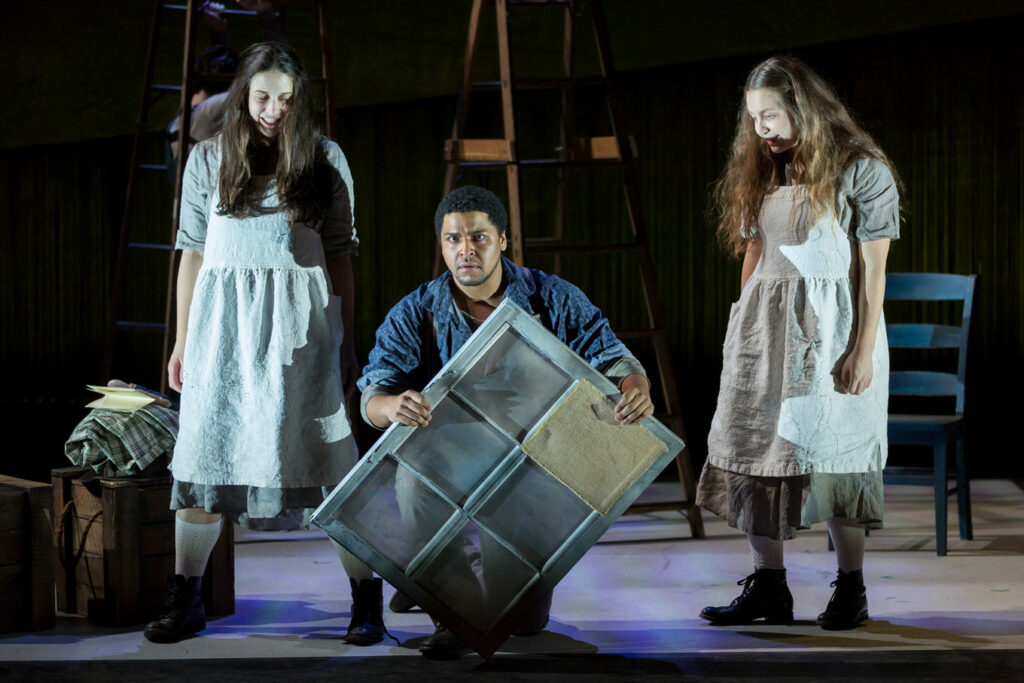
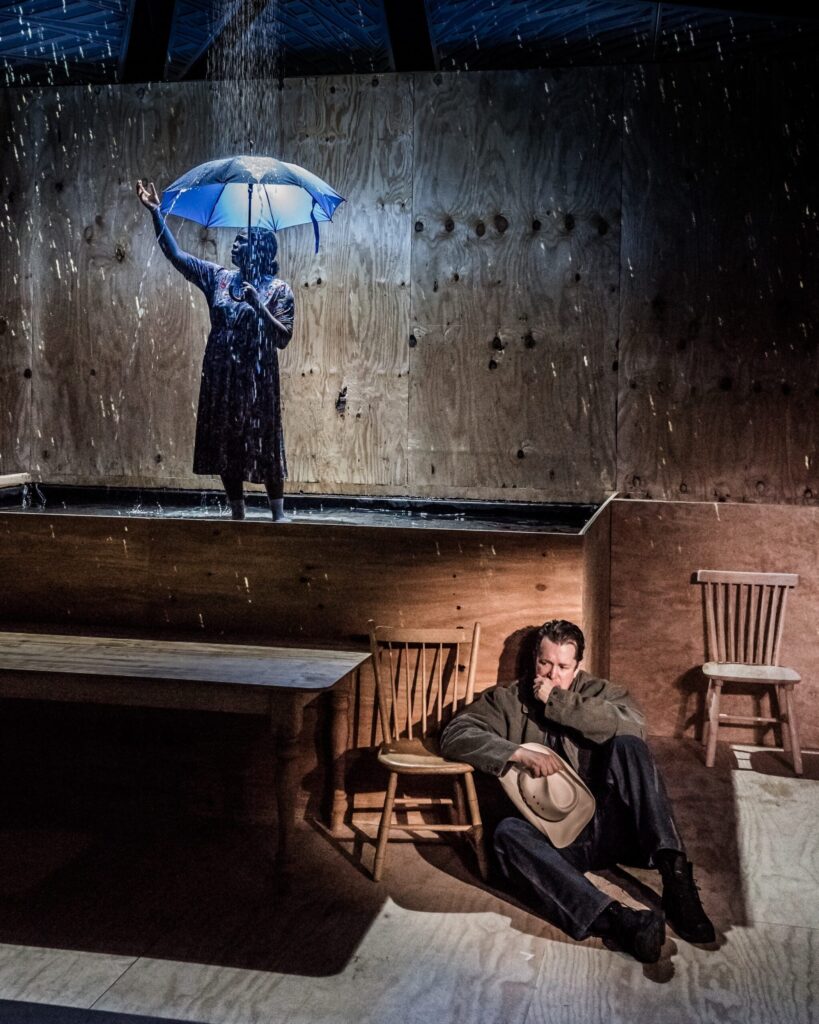
Proving Up, based on a story by Karen Russell, is an opera about the American Dream, told through the story of Nebrasken homesteaders in the 1870s. A family dreams of "proving up" and obtaining the deed to the land they've settled. They obsessively list the requirements of the Homestead Act: five years of harvest, a sod house dwelling, and perha...
Based on Carlos Reygada’s Acclaimed 2007 film Stellet Licht. Set within a Mennonite community in northern Mexico, the opera follows a pious husband and father, Johan, who’s strongly held spiritual obligation to his marriage, family, and community is put to the test when he falls in love with another woman from his faith.
Lors de la première chaude journée de printemps dans les montagnes, Olaf, un riche fermier, propose à Runa, une pauvre fermière, de découvrir qu'elle est amoureuse du bandit Davith. Irrité par cela, Olaf brûle la ferme de Runa et Runa s'échappe dans la montagne à la recherche de Davith.
Johannes Zegner, an alcoholic homesteader in drought-ridden 1870s Nebraska, tries to convince his son to make a dangerous journey that will help the family obtain the title to their land.
Purchase Score here.
Johannes Zegner sings of the “queer little trees” at a neighbor’s abandoned homestead. These trees are actually gravestones – crosses made of human bones.
Purchase score here.
A deranged, dirt-covered man sings obsessively about the infinite promise of westward expansion. He speaks of his family and how they couldn’t make it, but that doesn’t seem to matter to him because he has fulfilled all the requirements of the Homestead Act. It’s possible that he came to see his family as an impediment to “proving up” and has ki...





 French
  English